Arab Baths of Granada
Baths in Granada
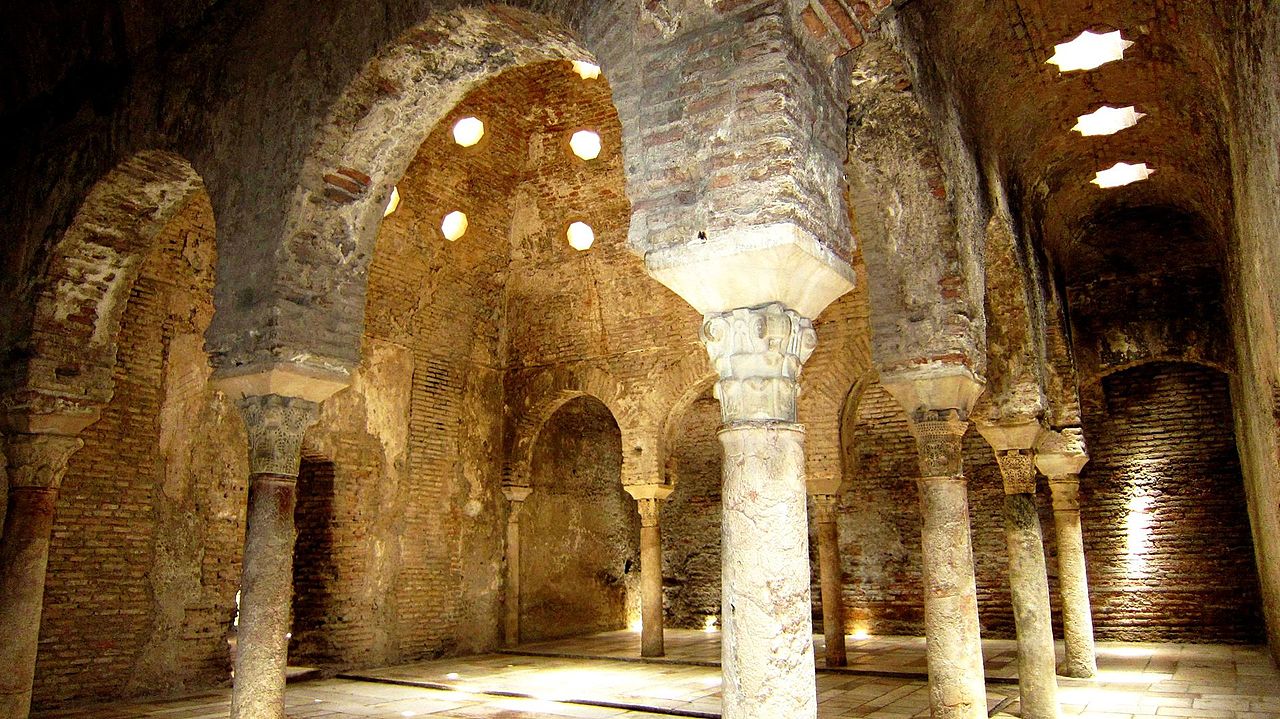
El Bañuelo de Granada is one of the most atmospheric historic sites in the Albaicín, a set of 11th-century Moorish baths that survive almost intact beneath a private house along the Carrera del Darro. As one of the oldest and largest hammams in Spain, this fascinating complex is one of the top attractions in Granada for travellers who enjoy early Islamic architecture and daily-life history. Its iconic octagonal skylights, horseshoe arches, and cool stone chambers make it often visited on walking tours of Granada, offering a glimpse into ritual cleansing, social gatherings, and community life a thousand years ago.
Once part of the Mezquita del Nogal, these baths were frequented by locals for grooming, relaxation, and celebrations such as pre-wedding visits by brides-to-be. Their survival is remarkable-while most hammams were demolished by Christian rulers after the Reconquest, El Bañuelo endured thanks to being built beneath a later house, which concealed and protected it for centuries.
Table of Contents
- History and Significance of the Arab Baths of Granada
- Things to See and Do in El Bañuelo
- How to Reach the Arab Baths of Granada
- Practical Tips on Visiting El Bañuelo de Granada
- Where to Stay close to El Bañuelo de Granada
- Is El Bañuelo de Granada Worth Visiting?
- FAQs for Visiting El Bañuelo de Granada
- Nearby Attractions to El Bañuelo de Granada
History and Significance of the Arab Baths of Granada
El Bañuelo was built in the 11th century during the rule of the Zirid king Badis (1038-1073) and funded by his Jewish vizier, Samuel ibn Naghrillah, a philosopher, poet, and political leader. As one of the earliest public baths in al-Andalus, it played a central role in daily Moorish life, offering a space for cleanliness, ritual purification, relaxation, and social exchange.
Unlike many other baths destroyed after the Christian conquest-partly because hammams were unfairly associated with immorality-El Bañuelo survived because it was hidden beneath a private Christian home. This architectural accident preserved what would otherwise have been lost, making the site one of the must-see places in Granada for understanding its Islamic heritage.
Declared a National Monument in 1918, the baths were restored by architect Leopoldo Torres Balbás, who removed later additions, added marble flooring, and re-established the traditional three-chamber design. Today, they stand as the best-preserved Arab baths in Andalusia, offering a rare immersion into medieval hygienic culture.
Things to See and Do in El Bañuelo
A visit to El Bañuelo reveals the classic sequence of rooms found in Moorish hammams. First is the entrance hall, where visitors once undressed and relaxed before bathing. This leads to the frigidarium, or cold chamber, followed by the slightly larger tepidarium, or warm chamber with its graceful arches. Finally, the caldarium, or hot room, forms the heart of the baths, decorated with horseshoe arches, marble elements, and traces of the original heating system.
The warm chamber is particularly striking thanks to its dome pierced with octagonal star-shaped skylights. These openings allowed shafts of light to fall across the room while also providing ventilation, creating a serene and otherworldly atmosphere. This is one of the things to do in Granada for travellers who love taking evocative architectural photos.
Visitors can also see the hole where the original water heater was located, as well as remains of water channels beneath the floor. These features once required wooden sandals to prevent bathers from burning their feet, a detail that brings the site vividly to life.
How to Reach the Arab Baths of Granada
El Bañuelo is located on Carrera del Darro, one of the most picturesque streets in Granada, at the foot of the Alhambra's forested hill.
You can reach the baths by taking the C1 or C2 bus and alighting at the stop named “El Bañuelo.”
The nearest airport is Federico García Lorca Granada-Jaén Airport. For the best deals and a seamless booking experience, check out these flights to Granada on Booking.com.
Granada's main train station offers connections to major Andalusian and Spanish cities before continuing into the Albaicín. Train schedules and bookings can be found on Omio.
Driving into the Albaicín is not recommended due to restricted access and narrow lanes; park in the city centre and walk the rest of the way. If you are looking to rent a car in Spain I recommend having a look at Discover Cars, first, as they compare prices and review multiple car rental agencies for you.
Practical Tips on Visiting El Bañuelo de Granada
- Suggested tips: Look upward-the star-shaped skylights are the most memorable feature of the baths.
- Best time to visit: Morning light enhances the beams shining through the roof apertures.
- Entrance fee: € 2.50
- Opening hours: September 15th - April 30th: Daily from 10:00 - 17:00
May 1st - September 14th: Daily from 9:30 - 14:30 and 17:00 - 20:30 - Official website:
- How long to spend: Around 20-30 minutes.
- Accessibility: There are uneven floors and low-lit areas; access may be limited for some visitors.
- Facilities: No facilities inside; cafés and shops are located nearby along Carrera del Darro.
- Photography tip: Capture the arches and starry roof openings by positioning yourself in the warm chamber.
- Guided tours: Many Albaicín tours include the baths as a key stop on historical routes.
- Nearby food options: Numerous tapas bars and cafés line Carrera del Darro and Plaza Nueva.
Where to Stay close to El Bañuelo de Granada
Staying near Carrera del Darro allows easy access to the baths and the historic city. For riverside charm, Shine Albayzín offers elegant rooms in a restored palace. For traditional Albaicín atmosphere, Hotel Santa Isabel La Real is a superb choice. A stylish alternative nearby is Palacio de Santa Inés, with beautiful interiors and Alhambra views.
Is El Bañuelo de Granada Worth Visiting?
Yes-El Bañuelo is absolutely worth a visit. As the oldest and best-preserved Arab public bath in Andalusia, it offers a rare and atmospheric look into medieval Moorish life. Its exquisite skylights, original chambers, and serene ambience make it a rewarding stop for history lovers, architecture enthusiasts, and anyone exploring the Albaicín.
FAQs for Visiting El Bañuelo de Granada
What is El Bañuelo?
An 11th-century Moorish bath complex and one of the oldest surviving hammams in Spain.
Why is it important?
It escaped destruction after the Reconquest, making it one of the few intact Islamic baths in Andalusia.
What is the highlight of the visit?
The warm chamber with its octagonal star-shaped skylights.
How long does a visit take?
Around 20-30 minutes.
Where is it located?
On Carrera del Darro, a short walk from Plaza Nueva.
Nearby Attractions to El Bañuelo de Granada
- Carrera del Darro: A historic riverside street lined with bridges and old houses.
- Mirador de San Nicolás: Granada's most iconic viewpoint overlooking the Alhambra.
- Archaeological Museum: Housed in a Renaissance mansion just steps away.
- Sacromonte: A hillside district known for cave houses and flamenco.
- Alhambra: The city's legendary palace complex rising above the Darro valley.
The Arab Baths of Granada appears in our Complete Guide to Visiting Granada!
This website uses affiliate links which may earn a commission at no additional cost to you!
Visiting Arab Baths of Granada
September 15th – April 30th: Daily from 10:00 – 17:00
May 1st – September 14th: Daily from 9:30 – 14:30 and 17:00 – 20:30
€ 2.50
Nearby Attractions
- Puerta de los Tablero (0.0) km
Bridge, City Gate and City Walls - Puerta de las Armas (0.1) km
City Gate - Torre de los Hidalgos (0.1) km
Tower - Torre de las Armas (0.1) km
Tower - Torre de la Vela (0.2) km
Tower - Alcazaba (0.2) km
Castle - Torre de Alquiza (0.2) km
Tower - Torre del Criado del Doctor Ortiz (0.2) km
Tower - Torre de la Sultana (0.2) km
Tower - Plaza de las Armas (0.2) km
Castle