History Museum, Lucerne
Museum in Lucerne
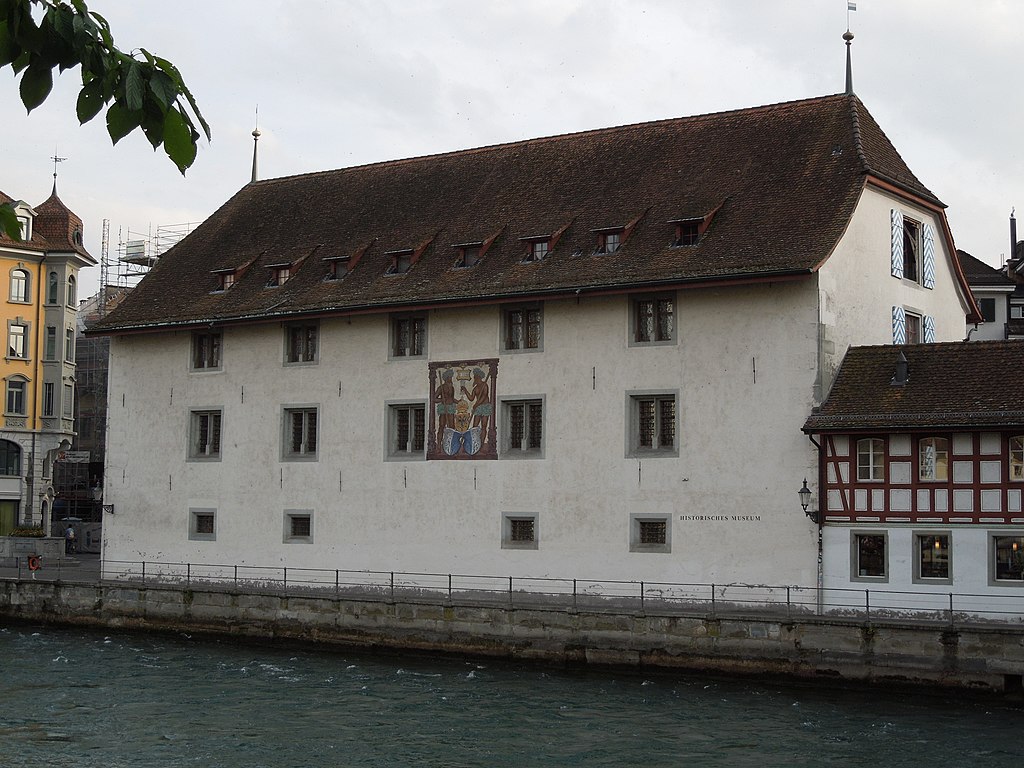
Tucked in a former arsenal on the banks of the Reuss, the History Museum Lucerne (Historisches Museum Luzern) is where the city's past feels surprisingly alive. Instead of just reading labels, you watch actors guide visitors on theatrical tours, slipping into the roles of townspeople, soldiers, or traders as they reveal how people once lived, worked, and celebrated along this very river. It is one of the top attractions in Lucerne if you love museums with personality and enjoy hearing stories rather than just dates.
Beyond the performances, the museum's permanent collection focuses on the cultural history and folklore of the Canton of Lucerne and the Lake Lucerne region. Around 3,000 artefacts are displayed using a clever “warehouse” concept: objects are stacked, shelved, and suspended, each with a barcode you can scan with a handheld device to dive deeper into its story. From everyday tools and costumes to sacred art and military trophies, the museum lets you explore at your own pace, and it is often visited on walking tours of Lucerne as the stop where the city's layered past finally clicks into place.
Table of Contents
- History and Significance of the History Museum Lucerne
- Things to See and Do in the History Museum Lucerne
- How to Get to the History Museum Lucerne
- Practical Tips on Visiting the History Museum Lucerne
- Where to Stay close to the History Museum Lucerne
- Is the History Museum Lucerne Worth Visiting?
- FAQs for Visiting History Museum Lucerne
- Nearby Attractions to the History Museum Lucerne
History and Significance of the History Museum Lucerne
The History Museum Lucerne is housed in a solid, elongated building that once served as the city's arsenal. Its thick walls and simple, practical architecture hint at centuries when weapons, armour, and military supplies were stored here to defend the town and canton. When the building's defensive role faded, it was a natural candidate to become a container for a different kind of power: the stories, objects, and memories that define Lucerne's identity.
Over time, the museum took shape as the central institution for collecting, documenting, and displaying artefacts with cultural-historical and folkloristic significance from Lucerne and the wider lake region. Its collections range from archaeological finds and medieval justice objects to guild banners, religious items, costumes, and everyday household pieces. Together, they trace how people in this part of Switzerland lived, believed, worked, traded, and celebrated from the Middle Ages to the present day.
What sets the History Museum apart is its commitment to relevance and interaction. Rather than locking objects behind static glass, the team has embraced performance, multimedia, and visitor participation as tools for bringing history to life. The result is a museum that feels more like an ongoing conversation between past and present: exhibitions, events, and theatrical tours constantly reinterpret the same core collection, showing how cultural history remains alive and open to new perspectives.
Things to See and Do in the History Museum Lucerne
One of the museum’s biggest draws is its programme of daily theatrical tours. Skilled actors lead 40-minute, theme-based walks through the galleries at 10 a.m., 11 a.m., 2 p.m., and 3 p.m., slipping into character as they move from one exhibit to another. You might find yourself listening to a “local” from centuries ago explaining their trade, or a costumed guide giving voice to objects that would otherwise stay silent. These tours are not just entertaining; they also help you situate individual artefacts within broader stories of power, religion, trade, or everyday life.
If you prefer to explore independently, the display warehouse concept is a real highlight. Instead of a few carefully spaced objects, you see shelves and racks filled with items, each tagged with a barcode. With a handheld scanner, you can wander at your own pace, scanning whatever catches your eye to pull up information, images, or background stories. It feels a bit like being let loose in a historical archive, but with the guidance and structure you need to make sense of it all. This approach works well for both detail-oriented adults and curious kids who like choosing their own path.
Another fascinating thread is the museum’s connection to the Danse Macabre on the Spreuer Bridge. Inside the museum you learn about Caspar Meglinger’s 1637 baroque cycle of Dance of Death paintings, whose vivid scenes show death as a universal force claiming people of all ages and social classes: young and old, nuns and popes, aristocrats and servant girls alike. With an audio guide, you then follow the story out of the museum, across the Spreuer Bridge to Mühlenplatz and back, accompanied by historical commentary and atmospheric music. It turns the city itself into an extended exhibition space, linking indoor displays with open-air art in a powerful, memorable way.
How to Get to the History Museum Lucerne
Most international visitors reach Lucerne via Zurich Airport (ZRH), which offers the most frequent European and long-haul connections and makes an ideal entry point for central Switzerland. For the best deals and a seamless booking experience, check out these flights to Lucerne on Booking.com. From the airport, regular trains run directly to Lucerne or via Zurich HB, with total journey times typically around one to one and a quarter hours.Train schedules and bookings can be found on Omio.
Once you arrive at Lucerne's main railway station, the History Museum is within easy walking distance. Head towards the Old Town and follow the riverbank upstream; in about 10-15 minutes you'll reach the museum building on Pfistergasse, set right beside the Reuss in the historic centre.Train schedules and bookings can be found on Omio. The walk itself is part of the experience, taking you past classic Lucerne views and giving an immediate sense of the city's medieval street pattern.
If you are travelling by car, Lucerne is well connected via the A2 and A14 motorways, and several public car parks are located near the station and on the edge of the Old Town. Because many central streets are pedestrianised or traffic-calmed, it is usually easiest to leave your vehicle in a multi-storey garage and explore the area on foot. From the parking, simply follow signs to the Old Town and the History Museum, or use a city map to navigate the short walk along the river.
Practical Tips on Visiting the History Museum Lucerne
- Suggested tips: Consider joining one of the daily theatrical tours first to get an engaging overview, then stay on to explore specific objects with the barcode scanners at your own pace.
- Best time to visit: Weekday mornings and early afternoons are often quieter; if you want to catch a particular theatrical tour, arrive a little early to secure your spot and settle in.
- Entrance fee: Adults: CHF 10.00
- Opening hours: Tuesday to Sunday 10:00 to 17:00, closed on Mondays
- Official website: https://historischesmuseum.lu.ch/
- How long to spend: Plan on 1.5 to 2 hours for a good look at the permanent exhibition and at least one theatrical tour; history lovers could easily spend half a day.
- Accessibility: The historic building has been adapted for visitors, but some areas may involve steps or uneven floors; check accessibility information in advance if you use a wheelchair or have reduced mobility.
- Facilities: Expect essentials such as toilets, cloakroom or lockers, and an information desk; cafés and additional services are available a short walk away in the Old Town and along the river.
- Photography tip: Respect any signage regarding photography, especially during theatrical tours; when allowed, focus on close-ups of intriguing objects or the dramatic warehouse-style displays rather than trying to capture entire rooms.
- Guided tours: In addition to the daily theatrical tours, the museum sometimes offers special themed tours or events; ask at the desk or check the website to see what’s on during your visit.
- Nearby food options: The surrounding streets and riverfront offer plenty of cafés, bakeries, and restaurants where you can grab a coffee, snack, or full meal before or after your museum visit.
Where to Stay close to the History Museum Lucerne
Staying in the Old Town puts you just a short walk from the History Museum and many of Lucerne's other key sights. Hotel des Balances is a stylish choice overlooking the Reuss, with elegant rooms and a riverside terrace; from here, you can stroll along the river and reach the museum in around 5-10 minutes while also being close to squares like Weinmarkt and Kornmarkt.
If you prefer a slightly more traditional feel, Hotel Wilden Mann occupies several historic townhouses and offers a warm, characterful atmosphere. Its location just a short walk from both the station and the Old Town means you can easily combine regional excursions with relaxed evenings wandering past the History Museum and along the riverfront.
For visitors who like to be near the transport hub but still within an easy walk of the museum, Hotel Monopol Luzern is almost directly opposite the main station. From the hotel, you can cross the river and follow the waterfront to the History Museum in about 10-15 minutes, making it a convenient base if you are relying on trains and boats to explore Lake Lucerne and beyond.
Is the History Museum Lucerne Worth Visiting?
The History Museum Lucerne is absolutely worth visiting if you want to go beyond surface-level sightseeing and really understand how the city and region have evolved. Its combination of rich collections, inventive warehouse-style displays, and daily theatrical tours makes history feel tangible and immediate, rather than distant or abstract. Add in the atmospheric setting on the river and the powerful link to the Danse Macabre on the Spreuer Bridge, and you have a museum that not only informs but also lingers in your memory long after you step back out into the Old Town streets.
FAQs for Visiting History Museum Lucerne
Where is the History Museum Lucerne located?
The museum stands on Pfistergasse, right beside the Reuss River in Lucerne’s Old Town, within walking distance of the main railway station.
Do I need to book the theatrical tours in advance?
Usually you can join on the day, but it is wise to arrive a little early, especially in busy seasons, and check at the desk whether spaces are limited.
Are the theatrical tours suitable for children?
Yes, many children enjoy the performances and interactive style, though the content is still rooted in real history and may be most engaging for school-age kids and older.
How long does a theatrical tour last?
Each themed theatrical tour lasts around 40 minutes, with daily departures typically at 10 a.m., 11 a.m., 2 p.m., and 3 p.m.
Is there information available in English?
Even if some tours or labels are primarily in German, the museum provides various forms of support such as translated texts or audio options, and many visitors who do not speak German still find the experience rewarding.
Nearby Attractions to the History Museum Lucerne
- Spreuerbrücke - The atmospheric covered bridge decorated with Caspar Meglinger's Danse Macabre panels, closely linked to the museum's Dance of Death audio tour.
- Weinmarkt - A historic Old Town square with the Fritschi Fountain and former guild houses, reflecting Lucerne's medieval market life.
- Jesuit Church - A beautiful Baroque church on the riverbank, known for its elegant façade and richly decorated interior.
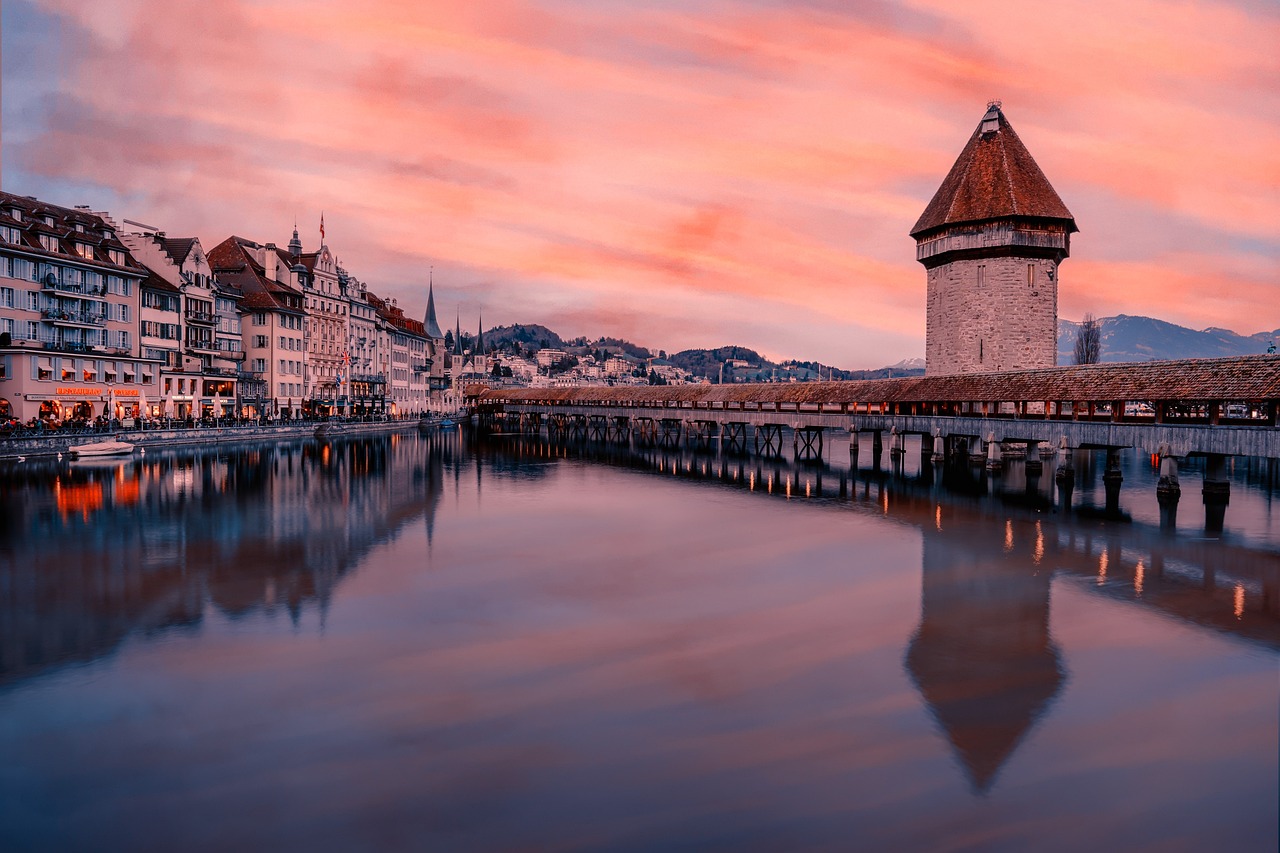
- Kapellbrücke (Chapel Bridge) - Lucerne's iconic covered wooden bridge with its water tower and painted panels, a short walk downstream.
- Natur-Museum Luzern - The city's nature museum, where interactive exhibits and live animals explore the flora, fauna, and geology of Central Switzerland.
The History Museum appears in our Complete Guide to Visiting Lucerne!
This website uses affiliate links which may earn a commission at no additional cost to you!
Visiting History Museum
Tuesday to Sunday 10:00 to 17:00, closed on Mondays
Adults: CHF 10.00
Nearby Attractions
- Spreuerbrücke (0.1) km
Bridge - Natur-Museum (0.1) km
Museum - Ritterscher Palace (0.2) km
Palace - Weinmarkt (0.3) km
Square - Jesuitenkirche (0.3) km
Church - Hirschenplatz (0.3) km
Square - Kornmarkt (0.3) km
Square - Lucerne Town Hall (0.3) km
Town Hall - Chapel Bridge and Water Tower (0.5) km
Bridge - Museum Rosengart Collection (0.5) km
Arts Venue