Odeon of Lyon
Roman Site in Lyon
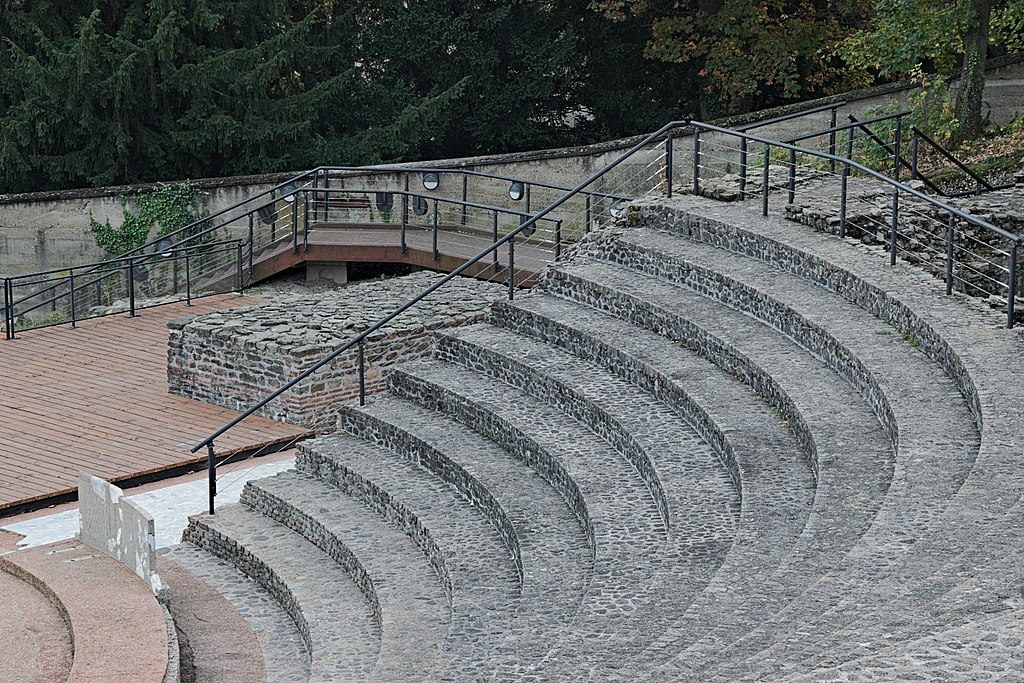
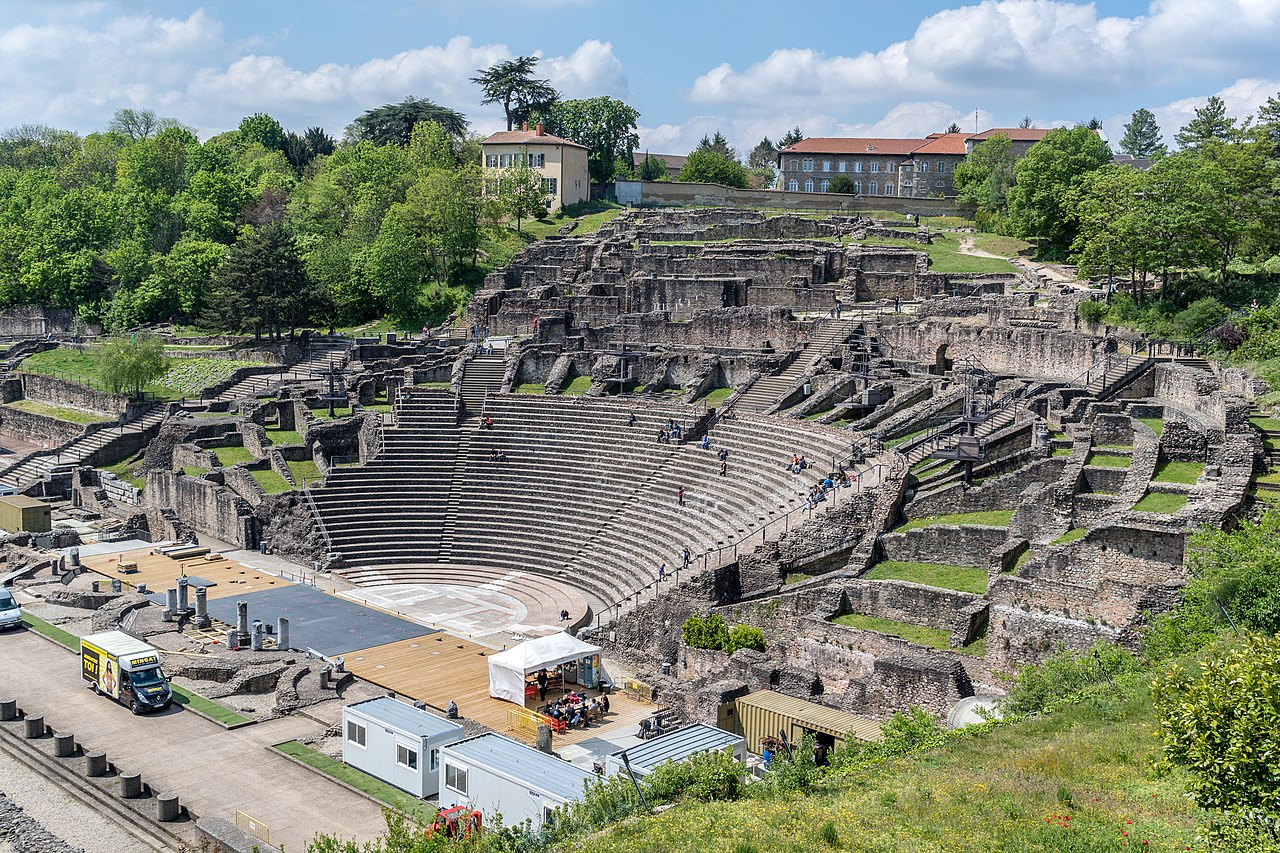
The Odeon of Lyon is one of the top attractions in Lyon for anyone who loves Roman history, architecture, or simply peaceful historic spaces. Sitting just beside the larger Ancient Theatre on Fourvière Hill, this smaller semi-circular venue once hosted music, poetry, and public readings in a setting designed for intimacy and perfect acoustics. Today, its stone tiers, traces of red and black marble, and clear outline of stage and orchestra create a powerful sense of place, especially when the hill is quiet in the early morning or at sunset.
Because the Ancient Theatre steals most of the spotlight, the Odeon often feels like a hidden gem. You can wander freely around the terraces, trace the curve of the orchestra, and imagine Roman citizens listening to a philosopher or a lyre performance against the backdrop of Lugdunum's hillside. The contrast between the Odeon's compact elegance and the grandeur of the theatre next door makes both monuments more meaningful when you visit them together, and it's a highlight of any walking tour of Lyon that climbs up to Fourvière.
Table of Contents
- History and Significance of the Odeon of Lyon
- Things to See and Do in the Odeon of Lyon
- How to Get to the Odeon of Lyon
- Practical Tips on Visiting the Odeon of Lyon
- Where to Stay close to the Odeon of Lyon
- Is the Odeon of Lyon Worth Visiting?
- FAQs for Visiting Odeon of Lyon
- Nearby Attractions to the Odeon of Lyon
History and Significance of the Odeon of Lyon
Built in the 2nd century AD, the Odeon of Lyon was part of the Roman city of Lugdunum's cultural heart. While the main theatre handled big public spectacles for thousands of people, the Odeon was reserved for more refined gatherings: musical performances, recitals, speeches, and poetic competitions that demanded clarity of sound more than sheer capacity. Its smaller scale and covered superstructure (now lost) would have helped protect audiences and improve acoustics, turning it into a kind of ancient concert hall.
The choice to build an odeon right next to the main theatre underlines how important Lugdunum was within the Roman Empire. As a major administrative and commercial centre, it needed spaces for both mass entertainment and more intellectual or ceremonial events. The Odeon, with its marble decoration and carefully shaped seating, reflected this blend of prestige and culture, serving as a venue where elites and invited audiences could enjoy performances in a controlled, elegant environment.
Over centuries, the building suffered from neglect, quarrying, and the slow erosion that affects most ancient structures. Yet archaeological work and careful restoration have brought its form back into focus. Today, visitors can clearly read the layout of the cavea (seating), the orchestra, and the stage foundations, making it much easier to picture its original use. As part of the wider Lugdunum archaeological park, it stands as a reminder that Lyon’s hilltops once echoed with Latin verse and music long before the basilica’s bells.
Things to See and Do in the Odeon of Lyon
Start by climbing up through the archaeological park and approaching the Odeon from above or from the main theatre side. From a higher vantage point, you can appreciate its smaller, tighter semi-circle and see how it tucks into the hillside beside its larger neighbour. The curvature of the seating tiers and the remains of radial stairways give a clear sense of how audiences once entered and settled in.
Once you’re at ground level, step down towards the orchestra area and take a moment to stand where performers would have stood. Looking back towards the seats, it’s easy to imagine the space roofed and dressed with columns and marble, filled with the focused attention of a few hundred spectators instead of the roar of thousands. You may still spot traces of red and black marble that hint at the Odeon’s former refinement and the care that went into its decoration.
Take time to wander slowly along the edges of the structure and across the paths that link it to the Ancient Theatre. Seen together, the two monuments tell a fuller story of Roman cultural life in Lugdunum, from large-scale drama and spectacles to more intimate performances. On a clear day, the hillside views and quiet atmosphere invite you to sit on a stone tier for a while, letting the modern city below fade into the background as you imagine the sounds that once filled this space.
How to Get to the Odeon of Lyon
Most international visitors arrive via Lyon-Saint Exupéry Airport (LYS), which has frequent connections across Europe and beyond; from the airport, the Rhônexpress tram links to central Lyon, where you can connect to the metro and funicular network to reach Fourvière Hill and the Lugdunum archaeological park. For the best deals and a seamless booking experience, check out these flights to Lyon on Booking.com.
From within France or neighbouring countries, trains bring you into Lyon Part-Dieu or Lyon Perrache stations, from which you can use the metro and then the funicular from Vieux Lyon - Cathédrale Saint-Jean up to Fourvière before walking a short distance to the Odeon and Ancient Theatre. You can use SNCF Connect to check schedules, compare routes, and purchase tickets for National (SNCF ) and regional trains (TER). For a more streamlined experience, we recommend using Omio, which allows you to easily compare prices, schedules, and book tickets for both National and Regional travel across all of Europe, all in one place.
If you're travelling by car, follow signs for Fourvière or use nearby parking areas on the hill or at the edge of Vieux Lyon, then continue on foot through the archaeological park paths to the Odeon. If you are looking to rent a car in France I recommend having a look at Discover Cars, first, as they compare prices and review multiple car rental agencies for you.
Practical Tips on Visiting the Odeon of Lyon
- Suggested tips: Combine your visit to the Odeon with the Ancient Theatre and the Gallo-Roman Museum next door for a fuller picture of Roman Lugdunum.
- Best time to visit: Early morning or late afternoon offers softer light, fewer people, and a more contemplative atmosphere on the hillside.
- Entrance fee: Access to the outdoor Odeon and theatre area is generally free; the adjoining Gallo-Roman Museum has a separate ticket.
- Opening hours: May 2 to September 30: 7:00 AM – 9:00 PM
October 1 to April 30: 7:00 AM – 7:00 PM
Open daily and accessible as an outdoor public site - Official website: https://lugdunum.grandlyon.com/en
- How long to spend: Allow 20-40 minutes at the Odeon itself, plus at least an hour more if you are also exploring the main theatre and museum.
- Accessibility: Paths around the site can be steep and uneven, with stone steps and sloping ground; sturdy shoes are recommended and visitors with reduced mobility should plan carefully.
- Facilities: Toilets, water fountains, and a small bookshop or café are located at or near the Gallo-Roman Museum rather than beside the Odeon itself.
- Photography tip: Shoot from the upper tiers to capture the full semi-circular layout, then move down to the orchestra for low-angle shots that emphasise the tiers rising behind you.
- Guided tours: Check for guided visits or themed walks that cover the entire Lugdunum site, as guides can help you visualise how the Odeon was roofed and furnished in Roman times.
- Nearby food options: Pack water and a snack or plan to eat in Vieux Lyon or on the Presqu'île afterwards, where cafés and restaurants are plentiful at the foot of the hill.
Where to Stay close to the Odeon of Lyon
Staying near Fourvière Hill makes it easy to explore the Odeon, Ancient Theatre, and basilica without long journeys. Villa Florentine offers elegant rooms and terraces with sweeping views over the city, and you can walk from the hotel to the Lugdunum archaeological park in just a few minutes.
If you prefer to be based in the old town at the foot of the hill, Cour des Loges Lyon, a Radisson Collection Hotel sits in the heart of Vieux Lyon’s Renaissance streets. From here, you can either climb the stairways up Fourvière or take the funicular, then stroll across to the Odeon and theatre for a full morning or afternoon of Roman history.
For a slightly more casual but very convenient base close to both river and hill, Collège Hôtel near the Saône is another good choice. It gives you quick access to Vieux Lyon, Presqu'île, and the Fourvière funicular, making it easy to slot a visit to the Odeon of Lyon into your broader city itinerary.
Is the Odeon of Lyon Worth Visiting?
The Odeon of Lyon is absolutely worth visiting, especially if you're already planning to see the Ancient Theatre or the Gallo-Roman Museum. Its smaller scale, preserved layout, and traces of marble create a more intimate, reflective experience than the main theatre alone, and standing in the orchestra with the hillside rising around you makes it easy to imagine the performances that once filled this space. For anyone interested in Roman culture, architecture, or simply tranquil historic sites with character, the Odeon is a quietly powerful stop on Fourvière Hill.
FAQs for Visiting Odeon of Lyon
Where exactly is the Odeon of Lyon located?
The Odeon of Lyon sits on Fourvière Hill, directly beside the Ancient Theatre, within the Lugdunum archaeological park above Vieux Lyon.
Do I need a ticket to visit the Odeon?
The outdoor Odeon and theatre area are generally free to access, though the nearby Gallo-Roman Museum requires a separate paid ticket.
How long does it take to visit the Odeon?
Most visitors spend around 20-30 minutes at the Odeon itself, often as part of a longer visit that includes the Ancient Theatre and museum.
Can I sit on the stone tiers?
Yes, visitors typically sit on the stone seating to enjoy the view and atmosphere, but it’s important to be respectful and avoid damaging the structure.
Is the Odeon suitable for children?
It can be a great spot for children interested in history or open spaces, though parents should be mindful of uneven ground and unprotected drops along some edges.
Nearby Attractions to the Odeon of Lyon
- Vieux Lyon - The Renaissance old town at the foot of the hill, full of traboules, bouchons, and cobbled streets that pair perfectly with a Fourvière visit.
- Ancient Theatre of Fourvière - The larger Roman theatre next door, once holding thousands of spectators and still used for performances today.
- Gallo-Roman Museum of Lyon-Fourvière - An excellent museum built into the hillside, showcasing artefacts and stories from Roman Lugdunum.
- Basilica of Notre-Dame de Fourvière - Lyon's iconic hilltop basilica with richly decorated interiors and some of the best city views.
- Parc des Hauteurs - A network of terraces and walkways along the hilltop, linking viewpoints, the basilica, and the Roman sites.
The Odeon of Lyon appears in our Complete Guide to Visiting Lyon!
This website uses affiliate links which may earn a commission at no additional cost to you!
Visiting Odeon of Lyon
May 2 to September 30: 7:00 AM - 9:00 PM
October 1 to April 30: 7:00 AM - 7:00 PM
Open daily and accessible as an outdoor public site
Access to the outdoor Odeon and theatre area is generally free; the adjoining Gallo-Roman Museum has a separate ticket.
Nearby Attractions
- Ancient Theatre of Fourvière (0.1) km
Roman Site - Gallo-Roman Museum of Lyon-Fourvière (0.2) km
Museum - Ancient Baths of Lyon (0.2) km
Roman Site - Tomb of Turpio (0.5) km
Roman Site - Basilica of Notre-Dame de Fourvière (0.5) km
Basilica - Parc des Hauteurs (0.5) km
Park - Funiculaire de Lyon (0.5) km
Cable Car - Cathédrale Saint-Jean (0.6) km
Cathedral - Metallic Tower of Fourvière (0.6) km
Tower - Place de la Basoche (0.7) km
Square