Plaza de la Merced, Málaga
Monument, Square and Statue in Málaga
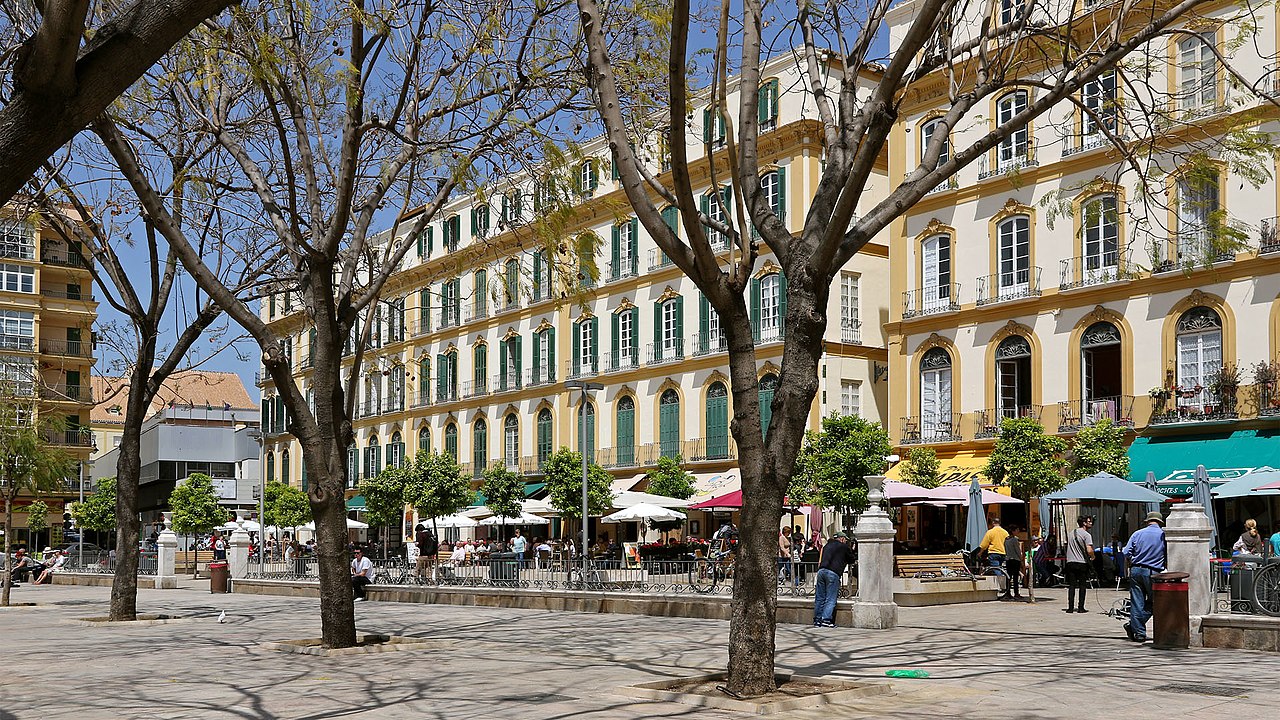
Plaza de la Merced is one of Malaga's most characterful squares, a generous open space at the top of Calle Granada where history and everyday life overlap in the best possible way. By day, its trees and terraces frame views of the surrounding streets; by evening, it fills with locals and visitors meeting for drinks, concerts, and open-air events that give this corner of La Merced barrio a constant, easy-going buzz.
Beneath the cafés and benches lies a story that stretches back to Roman times, through Moorish Málaga and the Christian conquest, all the way to 19th-century revolutions and the birth of Pablo Picasso. With its obelisk to General Torrijos, Picasso's birthplace, and the footprint of a vanished convent, Plaza de la Merced is a highlight of any walking tour of Malaga for travellers who like their people-watching with a strong dose of history.
Table of Contents
- History and Significance of the Plaza de la Merced
- Things to See and Do in the Plaza de la Merced
- How to Get to the Plaza de la Merced
- Practical Tips on Visiting the Plaza de la Merced
- Where to Stay close to the Plaza de la Merced
- Is the Plaza de la Merced Worth Visiting?
- FAQs for Visiting Plaza de la Merced
- Nearby Attractions to the Plaza de la Merced
History and Significance of the Plaza de la Merced
The area around Plaza de la Merced has been used as a public space since Roman times, making it one of the city's most enduring urban stages. During the period of Arabic rule, it lay just outside the city's defensive walls, close to the Puerta de Granada, the gate through which Ferdinand and Isabella entered Málaga in 1487 when they took the city. That alone gives you a sense of how long this open space has been linked to major turning points in Malaga's story.
In the 15th century, the square functioned as a bustling market known as Plaza del Mercado or Market Square, where merchants, farmers, and townspeople traded goods under the Mediterranean sun. Then, in 1507, Mercedarian friars arrived and acquired land on which they built a church and convent, giving the plaza the name it still holds today: Plaza de la Merced. The convent complex stood here for centuries, shaping the rhythm of daily life until it was irreparably damaged during the Burning of the Convents in 1931.
The square's names and roles have shifted with Spain's political tides. In the 1820s it was re-baptised Plaza Riego in honour of liberal General Rafael del Riego, who had lived in a building on the square and became a symbol of constitutional resistance. Only in the 19th century did Plaza de la Merced take on the layout and appearance you recognise today, with its broad central space, surrounding façades, and the towering monument that anchors its centre.
Things to See and Do in the Plaza de la Merced
The visual and symbolic heart of Plaza de la Merced is the Monumento a Torrijos, a neoclassical obelisk dedicated to General José María Torrijos and his companions. Erected in the 19th century, it commemorates Torrijos's ill-fated return from exile in 1831, when he landed near Málaga hoping to spark a liberal uprising, only to be trapped, captured, and executed with 48 comrades on the orders of Ferdinand VII. The remains of these men rest in the base of the monument, turning the square into a space of both everyday life and solemn remembrance.
On a more intimate scale, the bronze statue of Pablo Picasso adds a lighter, more playful note to the plaza. Created by Francisco López Hernández and installed in 2008, it shows Picasso seated on a marble bench, sketchbook and pencil in hand. The statue occupies part of the bench, leaving room for you to sit beside him for a photo or a quiet moment, a simple but effective way of connecting visitors to Malaga’s most famous son.
Just steps away, at number 15 Plaza de la Merced, stands the Casa Natal de Picasso, the house where he was born and now home to the Pablo Ruiz Picasso Foundation and museum. Inside, exhibitions explore his early years, family environment, and artistic influences, while late October brings special festivities to mark the artist's birthday. At the northwest corner of the square, you can also trace the footprint of the former Church and Convent of Our Lady of Mercy, whose loss in 1931 is still part of local memory, even as the square continues to evolve as a lively meeting place.
How to Get to the Plaza de la Merced
Plaza de la Merced sits in the historic centre of Malaga, at the upper end of Calle Granada, making it easy to reach once you are in the city. Most visitors arrive via Málaga-Costa del Sol Airport, a busy hub with frequent flights from across Spain and Europe, located just a short ride from the city centre. For the best deals and a seamless booking experience, check out these flights to Málaga on Booking.com.
From central Malaga, the square is within comfortable walking distance of most key sights, including Calle Larios and the cathedral. There is no train directly to the plaza itself, but mainline and suburban trains arrive at María Zambrano station, from where you can connect by local bus or a 20-25 minute walk through the centre.Train schedules and bookings can be found on Omio. Several city bus routes also stop nearby, making it simple to drop in for an hour or weave the square into a longer day of sightseeing.
Travelling by car into Malaga’s historic core is possible but not always convenient, as streets are narrow, some areas are pedestrianised, and parking is mostly in underground garages or designated lots around the centre.If you are looking to rent a car in Spain I recommend having a look at Discover Cars, first, as they compare prices and review multiple car rental agencies for you. If you do drive, look for parking near the port, Alameda Principal, or along the edge of the old town, then walk up through Calle Larios and Calle Granada until the city opens out into Plaza de la Merced.
Practical Tips on Visiting the Plaza de la Merced
- Suggested tips: Combine your visit with a stop at Picasso's birthplace and a stroll up to the Alcazaba or Gibralfaro for a well-rounded historic route.
- Best time to visit: Evenings are especially atmospheric, when locals gather on terraces and the square fills with chatter, but mornings are quieter if you prefer a calmer feel.
- Entrance fee: Free
- Opening hours: 24 Hours
- How long to spend: Plan 30-60 minutes to explore the square, see the Torrijos monument, and visit the Picasso statue, longer if you add Casa Natal de Picasso or a café stop.
- Accessibility: The square is mostly flat and open, with benches and ample space, making it reasonably accessible, though some surrounding streets are cobbled.
- Facilities: Benches, shade trees, and plenty of cafés and bars around the edges provide seating, toilets, and refreshments; additional services are close by in the old town.
- Photography tip: Capture the obelisk framed by the surrounding façades, close-ups of the Torrijos inscriptions, and candid shots of life around the Picasso statue at golden hour.
- Guided tours: Many guided walks of Malaga include Plaza de la Merced, often using it to introduce both Picasso's early life and the city's liberal, revolutionary history.
- Nearby food options: You are spoiled for choice, with tapas bars, ice cream parlours, and casual restaurants lining the plaza and the nearby streets of La Merced and Calle Granada.
Where to Stay close to the Plaza de la Merced
If you want to be right in the middle of Malaga's historic and cultural scene, staying near Plaza de la Merced is a smart choice. A stylish option just a short walk away is Room Mate Larios, which puts you on the city's main pedestrian street with easy access to the square and the rest of the old town. For something boutique and characterful nearer the Roman Theatre and Alcazaba, Hotel Boutique Teatro Romano offers modern comfort in a prime historic location. Another appealing choice is Málaga Premium Hotel, a contemporary hotel with a lively rooftop bar, well placed for strolling to Plaza de la Merced, the port, and the city's main museums.
Is the Plaza de la Merced Worth Visiting?
Plaza de la Merced is absolutely worth visiting, whether you are in Malaga for a quick city break or a longer coastal stay. It brings together Roman roots, Moorish-era geography, Christian conquest, liberal uprisings, and the birth of Picasso in a single, very walkable space. Add in the monument to Torrijos, the accessible Picasso statue, and the square's role as a social hub for locals, and you have a place that feels both deeply historic and very alive-one of the things to do in Malaga that really helps you feel the city's personality rather than just ticking off sights.
FAQs for Visiting Plaza de la Merced
Where is Plaza de la Merced in Malaga?
Plaza de la Merced sits in the La Merced neighbourhood at the top end of Calle Granada, a short walk from Calle Larios, the cathedral, and the Alcazaba.
Is Plaza de la Merced safe to visit at night?
Yes, the square is generally lively and safe in the evenings, with plenty of people out at cafés and bars, though normal city awareness is always recommended.
Can I visit Picasso’s birthplace while I am in the square?
Yes, Casa Natal de Picasso is located at number 15 Plaza de la Merced and operates as a museum, with exhibitions and events focused on the artist's early life and legacy.
Are there many events in Plaza de la Merced?
Open-air events, cultural activities, and occasional concerts or festivals are held here from time to time, especially during local celebrations and cultural programs.
Nearby Attractions to the Plaza de la Merced
- Casa Natal de Picasso: The birthplace of Pablo Picasso on the corner of the square, now a museum and foundation dedicated to his life and work.
- Alcazaba of Malaga: A Moorish palace-fortress rising above the city, just a short walk away and offering historic courtyards, ramparts, and city views.
- Roman Theatre of Malaga: An ancient theatre at the foot of the Alcazaba, partially restored and beautifully lit at night.
- Malaga Cathedral: Known as “La Manquita,” this unfinished Renaissance-Baroque cathedral is one of the city's most iconic landmarks, a pleasant stroll from the square.
- Calle Larios and Plaza de la Constitución: The main shopping street and central plaza of Malaga's historic centre, perfect for strolling, shopping, and people-watching.
The Plaza de la Merced appears in our Complete Guide to Visiting Málaga!
This website uses affiliate links which may earn a commission at no additional cost to you!
Visiting Plaza de la Merced
24 Hours
Free
Nearby Attractions
- Museo Casa Natal (0.1) km
Historic Building and Museum - Iglesia de Santiago (0.1) km
Church - Teatro Cervantes (0.2) km
Theatre - Roman Theatre (0.2) km
Historic Site and Theatre - Picasso Museum (0.2) km
Museum - Church of San Agustin (0.2) km
Church - Alcazaba (0.3) km
Castle - Museo de Málaga (0.4) km
Museum - Málaga Cathedral (0.4) km
Cathedral - Museo del Vidrio y Cristal (0.4) km
Museum


