Roman Amphitheater, Lecce
Amphitheatre in Lecce
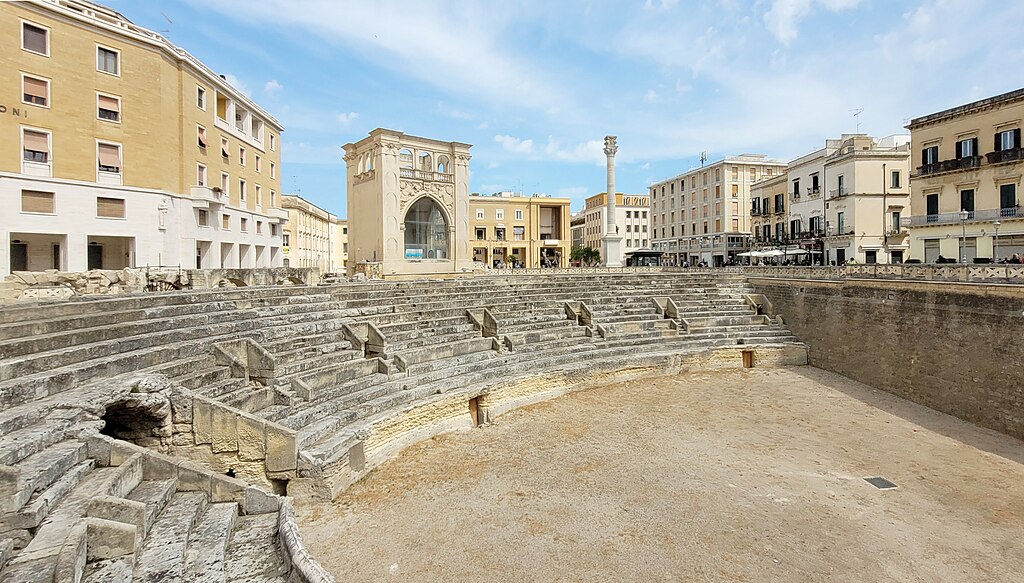
The Roman Amphitheatre of Lecce is one of the best places to visit in Lecce for lovers of archaeology and ancient history. Hidden for centuries beneath layers of earth and later buildings, it was rediscovered only in 1901 when construction workers digging foundations unexpectedly revealed its stone seating. Today, this semi-buried arena occupies the centre of Piazza Sant'Oronzo, offering an extraordinary glimpse into Lecce's Roman past and making it a highlight of any walking tour of Lecce.
Built during the reign of Emperor Hadrian in the 2nd century CE, the amphitheatre once held at least 15,000 spectators. Its partially excavated horseshoe-shaped structure, decorated with reliefs showing gladiators, animals, and combat scenes, gives visitors a vivid sense of the performances that once thrilled ancient crowds.
Table of Contents
- History and Significance of the Roman Amphitheatre
- Things to See and Do in the Roman Amphitheatre
- How to Get to the Roman Amphitheatre of Lecce
- Practical Tips on Visiting the Roman Amphitheatre
- Where to Stay close to the Roman Amphitheatre
- Is the Roman Amphitheatre Worth Visiting?
- FAQs for Visiting the Roman Amphitheatre of Lecce
- Nearby Attractions to the Roman Amphitheatre
History and Significance of the Roman Amphitheatre
During the 2nd century CE, Lecce-then known as Lupiae-was a modest but lively settlement and trading post along the Mediterranean. The construction of an amphitheatre of this size reflects its importance within the region and its connection to broader Roman cultural life. Games, animal hunts, and gladiatorial contests were staged here, echoing entertainment traditions across the Empire.
Over the centuries, the structure became engulfed by soil and urban development. Entire buildings rose above it, while memory of the arena faded. Its rediscovery in 1901 was a monumental moment for the city, sparking decades of archaeological work. Only about one-third of the amphitheatre has been excavated, as further digging would require demolition of historic structures around Piazza Sant'Oronzo.
Nevertheless, what remains is remarkably informative. Reliefs still visible on the surrounding walls depict bulls, lions, bears, and gladiators-an enduring visual testimony to the spectacles that animated the arena. The monument forms part of a wider landscape of ruins and Baroque architecture that tells the full story of Lecce’s evolution.
Things to See and Do in the Roman Amphitheatre
Visitors can walk along the perimeter of the amphitheatre to view its exposed sections, gaining a clear understanding of its scale and design. The curved arrangement of stone seating, the remnants of stairways, and the arena floor all remain visible, creating an immersive sense of ancient space.
Interpretive panels help contextualise the activities that once took place here, from gladiatorial duels to wild animal hunts. Observing the remaining sculpted scenes on the walls brings these performances to life, offering insight into Roman entertainment and the symbolic role of arenas within urban life.
At night, the amphitheatre gains a distinct atmosphere. As one of the few monuments in the square not illuminated, it feels even more ancient, enhancing the contrast between millennia-old stone and the vibrant modern city surrounding it. Depending on the season, the amphitheatre also hosts cultural events, allowing it to continue its ancient role as a gathering place for the community.
How to Get to the Roman Amphitheatre of Lecce
The amphitheatre sits directly in Piazza Sant'Oronzo, in the heart of Lecce's historic centre. The nearest major airport is Brindisi Airport, which offers domestic and international flights and easy onward travel to Lecce. For the best deals and a seamless booking experience, check out these flights to Lecce on Booking.com.
Lecce's main railway station connects the city to Bari, Brindisi, and other Apulian hubs. From the station, visitors can reach Piazza Sant'Oronzo on foot or by local bus within minutes. Use Omnio to easily compare schedules, book train tickets, and find the best prices all in one place for a hassle-free journey across Italy.
For those arriving by car, parking is located around the perimeter of the old town, as vehicular access into the historic centre is restricted. A short walk through Lecce’s narrow Baroque streets leads directly to the amphitheatre. If you are looking to rent a car in Italy I recommend having a look at Discover Cars, first, as they compare prices and review multiple car rental agencies for you.
Practical Tips on Visiting the Roman Amphitheatre
- Suggested tips: Walk the perimeter slowly to appreciate the architectural details and surviving reliefs.
- Best time to visit: Late afternoon or evening for atmospheric views and softer light.
- Entrance fee: The exterior viewing is free; occasional interior access may require a ticket.
- Opening hours: The exterior can be viewed at any time; interior access varies.
- Official website: Check Lecce’s tourism information for seasonal updates.
- How long to spend: Around 20-40 minutes depending on your interest.
- Accessibility: The surrounding piazza is accessible, but the interior, when open, includes uneven ground.
- Facilities: Cafés, shops, and restrooms available around Piazza Sant'Oronzo.
- Photography tip: Capture the contrast between the Roman ruins and the surrounding Baroque architecture.
- Guided tours: Many city walking tours include a stop here.
- Nearby food options: Plenty of cafés and restaurants encircle the piazza.
Where to Stay close to the Roman Amphitheatre
For a luxurious stay steps from Piazza Sant'Oronzo, consider Risorgimento Resort. Travellers wanting a boutique experience near Lecce’s main monuments might enjoy Patria Palace Hotel. For a stylish and tranquil retreat within walking distance, La Fiermontina offers an elegant blend of art and heritage.
Is the Roman Amphitheatre Worth Visiting?
Yes. The Roman Amphitheatre is one of the must-see places in Lecce, offering an extraordinary view into the city's ancient past right from its modern centre. Its unexpected rediscovery, impressive scale, and enduring reliefs make it an unforgettable stop for history lovers and casual visitors alike.
FAQs for Visiting the Roman Amphitheatre of Lecce
How much of the amphitheatre is excavated?
Roughly one-third; further excavation would impact surrounding buildings.
Can you enter the amphitheatre?
Sometimes, depending on seasonal access and event schedules.
When was it built?
In the 2nd century CE, during the reign of Emperor Hadrian.
What kinds of shows were held here?
Gladiatorial combats, animal hunts, and public spectacles.
Nearby Attractions to the Roman Amphitheatre
- Piazza Sant'Oronzo: Lecce's central square with historic buildings.
- Basilica di Santa Croce: A stunning Baroque masterpiece nearby.
- Castle of Charles V: A large fortress with exhibitions and cultural events.
- Roman Theatre: Another ancient performance space hidden within the city.
- Duomo di Lecce: A striking Baroque cathedral with an elegant square.
The Roman Amphitheater appears in our Complete Guide to Visiting Lecce!
This website uses affiliate links which may earn a commission at no additional cost to you!
Visiting Roman Amphitheater
Nearby Attractions
- Piazza Sant'Oronzo (0.1) km
Square - Castle of Charles V (0.2) km
Castle - Roman Theatre (0.2) km
Roman Site - Palazzo Taurino: Jewish Museum of Lecce (0.2) km
Museum - Chiesa di San Matteo (0.2) km
Church - Basilica di Santa Croce (0.2) km
Basilica - Museo Faggiano (0.3) km
Museum - Lecce Cathedral (0.3) km
Cathedral - Santi Nicolò e Cataldo (1.3) km
Church - Palazzo Granafei-Nervegna (37.2) km
Palace


